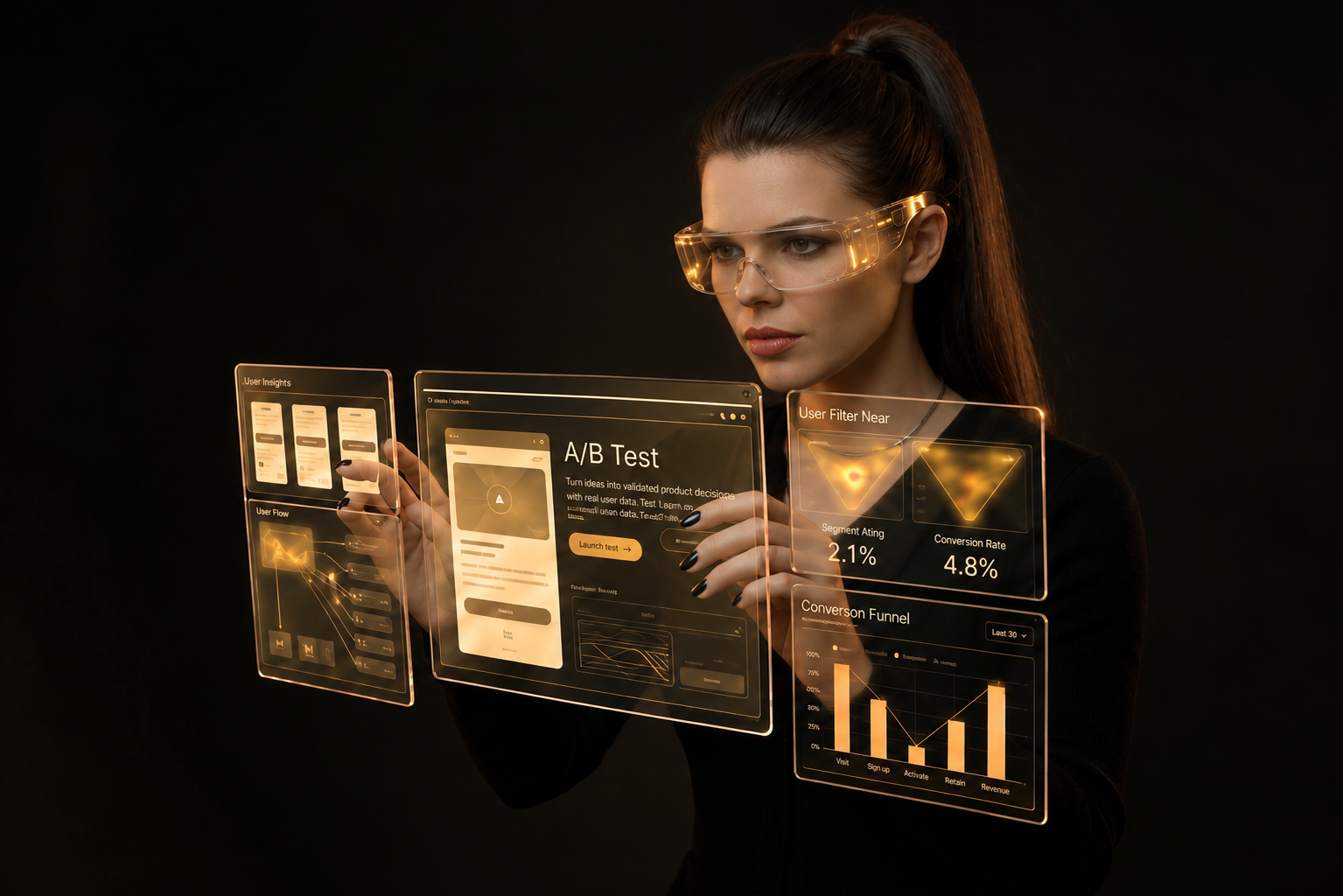
A product can look exceptional and still fail to convert.
Beautiful screens, modern typography, and smooth animations create a strong first impression. But if users struggle to understand the value, hesitate at critical steps, or lose their way through the experience, visual appeal won't be enough.
A beautiful interface attracts attention. A well-designed user experience turns that attention into meaningful action.
That's why I approach high-fidelity prototyping as more than interface design. Before development begins, I focus on how the entire product experience works, from the first interaction to the intended outcome.
Intuitive UX Is More Than Easy Navigation
An intuitive experience isn't simply one where users can find the right button. It's one where each step feels natural, relevant, and easy to understand.
Users should know where they are, what they can do, what happens next, and why the next action is worth taking. Clear information architecture, familiar interaction patterns, consistent interface behavior, and thoughtful visual hierarchy all contribute to that experience.
But even a logically structured flow can create friction if it doesn't reflect how people actually think and make decisions.
Imagine a SaaS onboarding process that asks users to configure ten settings before showing them what the product can do. Every step might be technically logical, yet the overall experience creates unnecessary effort before delivering value.
A stronger approach prioritizes the user's immediate goal, introduces complexity progressively, and makes the next meaningful action obvious.
The best user flows don't make people think about how to use the product. They help people focus on what they came to accomplish.
Conversion Funnels Need More Than Strong CTAs
A conversion funnel isn't just a sequence of screens connected by buttons. It's a journey where each step needs to maintain user motivation, provide the right information, and remove unnecessary barriers.
Consider an eCommerce checkout. A prominent Buy Now button won't compensate for unexpected shipping costs, confusing delivery options, or a payment process that feels unreliable.
The same principle applies to SaaS activation, subscription upgrades, registrations, and other conversion journeys.
Effective conversion-focused UX requires understanding where users might hesitate, what information they need before making a decision, and which interactions could interrupt their momentum.
That means carefully designing the sequence of steps, minimizing unnecessary input, placing CTAs in the right context, and providing clear feedback throughout the journey.
It also means anticipating what happens outside the ideal scenario. What if a payment fails? What if a user enters incorrect information? What if they abandon a process halfway through and return later?
A strong funnel makes the intended action feel like a natural next step, not something the interface has to push users toward.
Trust Is Part of the User Experience
Even when a product is easy to navigate, users may hesitate if they don't feel confident about what they're doing.
Trust is especially important when an experience involves payments, personal information, subscriptions, or decisions with financial consequences.
Clear pricing, transparent terms, recognizable payment methods, security indicators, consistent design, and visible support options can all help reduce uncertainty.
But trust isn't created by placing a few badges on a screen. It develops through the entire experience.
A checkout that clearly explains its costs builds confidence. A subscription flow that communicates renewal terms avoids unpleasant surprises. An interface that provides understandable error messages and confirms completed actions helps users feel in control.
These details may seem small in isolation, but together they influence whether users feel comfortable moving forward.
Trust isn't a decorative UI element. It's something the product experience needs to earn at every critical step.
Think About Measurement Before Development
A well-designed product should not only guide users toward meaningful actions. It should also make it possible to understand how effectively the experience performs.
That's why I consider product analytics while designing user journeys, rather than treating tracking as an afterthought.
Which actions indicate that users have experienced value? Where are the critical conversion points? Which steps might create drop-offs? What events should be tracked to understand activation, funnel completion, or feature adoption?
Defining these questions early helps connect UX decisions with measurable business outcomes.
It also creates a clearer foundation for experimentation once the product is launched. Instead of relying on assumptions about what works, teams can evaluate user behavior, identify friction, and optimize the experience using real data.
High-Fidelity Prototyping Brings the Entire Experience Together
This is where strategic high-fidelity prototyping becomes especially valuable.
Rather than creating a collection of polished screens, I build realistic interactive product experiences that bring together user flows, business logic, conversion paths, and key interaction scenarios.
A well-developed prototype lets founders and product teams experience the journey before development begins. They can navigate complete flows, explore important interactions, evaluate decision points, and identify confusing or missing steps.
It also makes complex product ideas easier to communicate. Founders can demonstrate their vision to investors and potential customers, teams can align around a shared understanding, and developers can work from clearer requirements and interaction specifications.
Most importantly, the prototype becomes a practical way to refine the experience while changes are still faster and less expensive to make.
The result isn't just a realistic representation of the interface. It's a structured product concept with carefully designed user journeys, clear interaction logic, and a stronger foundation for development.
Final Thought
A beautiful interface can make people notice your product. But what happens after that first impression determines whether they understand its value, trust the experience, and complete the actions that matter.
Intuitive flows, thoughtful conversion funnels, trust-building interactions, and measurable product goals should be considered from the beginning, not added after the screens are designed.
Design the experience with intention. Validate the journey before development. Build a product that makes sense to users and supports real business goals.
Building something new? Let's make sure the experience works before you build it.